
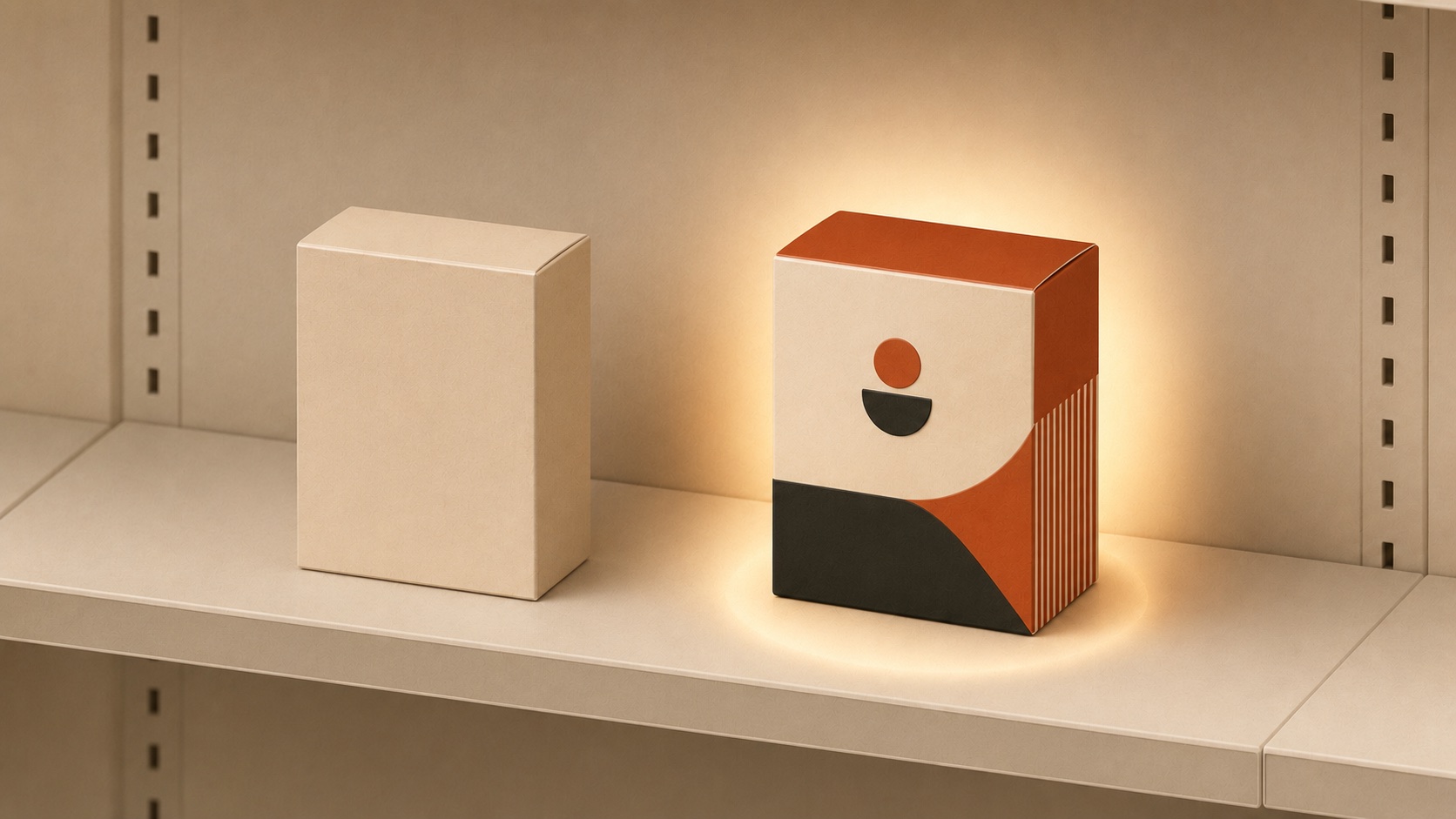
Most marketplace sellers spend ₹5,000 on a logo and call it branding. Then they wonder why their store looks identical to the 47 other sellers in the same category, why customers only come back when they run a sale, and why their conversion rate never improves despite good reviews.
A logo is not a brand. It is one element of one. What marketplace sellers actually need — and what the top performers on Flipkart and Amazon have — is brand language.
What brand language is and why it matters on marketplaces
Brand language is the complete system that defines how your brand looks, sounds, and behaves across every touchpoint. It includes your colour palette with usage rules, your typography, your tone of voice, your customer personas, and your brand positioning — the specific place you occupy in your category.
On a marketplace, brand language is not a nice-to-have. It is the infrastructure that determines whether your store converts browsers into buyers and buyers into repeat customers.
Flipkart’s Brand Store and Amazon’s Brand Store both give registered brands premium real estate — custom layouts, video banners, curated product displays, and cross-selling modules. These features exist because Flipkart and Amazon have the data: branded sellers convert better, return less, and retain customers at higher rates than unbranded sellers.
But most sellers who access these features fill them with generic content — the same stock photography, the same product-feature bullet points, the same “quality you can trust” tagline — because they do not have a brand language to draw from. The result is a premium layout with commodity content.
What the top 1% of marketplace sellers do differently
The brands consistently ranking at the top of competitive categories on Flipkart and Amazon share three things that have nothing to do with price or catalogue size.
They have a defined tone of voice. Read the product descriptions of a brand like Mamaearth, Wakefit, or Noise. Then read a generic seller in the same category. The difference is immediate. Mamaearth sounds like a trusted friend who happens to know a lot about ingredients. Wakefit sounds like someone who has thought deeply about sleep. Noise sounds like it is talking to someone who wants technology that keeps up with them. Each of these is a defined tone — not a logo, not a tagline, but a consistent way of speaking that runs through every product title, every description, every review response, every packaging insert.
They know exactly who they are selling to. The best marketplace sellers have customer personas so specific that every product listing, every sponsored ad creative, and every A+ content module is written for one type of person. Their images show that person’s life, not a generic lifestyle shot. Their bullet points address that person’s specific concern, not a generic feature list. This specificity is what drives the click-through rates and conversion rates that algorithms reward with organic ranking.
They have a consistent visual identity across everything. From their packaging to their product images to their Brand Store banner to their seller profile — the colour palette, the photography style, and the typography are consistent. This consistency builds recognition. In a category scroll where 20 products look identical, the brand with a consistent visual language is the one that gets the click without a discount.
What Flipkart and Amazon’s own data says
Amazon’s internal research shows that brands with A+ content see an average 8% increase in sales. Brands with Premium A+ content — the enhanced modules available to brand-registered sellers with strong performance — see up to 20% higher conversion rates. These features are not magic. They work because they give sellers the space to express a brand identity. Sellers who do not have a brand identity to express see minimal lift from the same features.
Flipkart’s Brand Store analytics consistently show that buyers who engage with a brand’s store page have higher basket values and higher repeat purchase rates than buyers who find the same product through category search. The store page works as a brand experience — but only if the brand has something to express.
The three brand language assets every marketplace seller needs
You do not need a brand agency, a six-month strategy project, or a ₹10 lakh budget to build brand language. You need three things.
A tone of voice guide. How your brand speaks. The words it uses and avoids. The sentence length and rhythm. The personality behind the copy. This guide is what ensures your product descriptions, your A+ content, your packaging text, and your social media all sound like the same brand — not like four different people wrote them on four different days.
A customer persona. One to two detailed profiles of your most valuable buyer — not demographic data, but psychographic clarity. What does she worry about? What does she aspire to? What would make her choose you over a lower-priced competitor? What would make her come back? This persona is what your listing copy, your ad creative, and your packaging should be written for.
A brand positioning statement. The single sentence that defines what you are, who you are for, and why you are different from the alternatives. Not a tagline — a strategic anchor. For [target buyer] who [specific need], [your brand] is the [category] that [specific benefit]. Unlike [main alternative], [your brand] [specific differentiator]. This statement is what gives your category strategy coherence and your A+ content a clear message hierarchy.
How to build brand language without an agency
Traditionally, building these three assets required hiring a brand strategist or agency — a process that takes weeks and costs anywhere from ₹50,000 to ₹5 lakh depending on the brief.
thebrandlanguage generates all three — plus a complete colour palette, typography direction, imagery guidelines, and social post examples — in four minutes from your website URL. The output is a shareable brand language document that any designer, copywriter, or marketplace listing manager can use immediately.
For marketplace sellers, the practical impact is immediate. Your A+ content writer has a tone of voice guide to write from. Your photographer has visual direction. Your ad agency has a positioning statement and customer persona to brief from. Everyone is working from the same brand language — not making independent decisions that produce inconsistent output.
Ready to build your brand language? Create yours free → Four minutes. No agency. The brand language your Flipkart and Amazon store needs to compete on more than price.
Leave a Reply